Tap to unlock the vehicle
Behind this everyday action,
It is a crystal oscillator smaller than a fingertip that precisely directs every signal transmission.
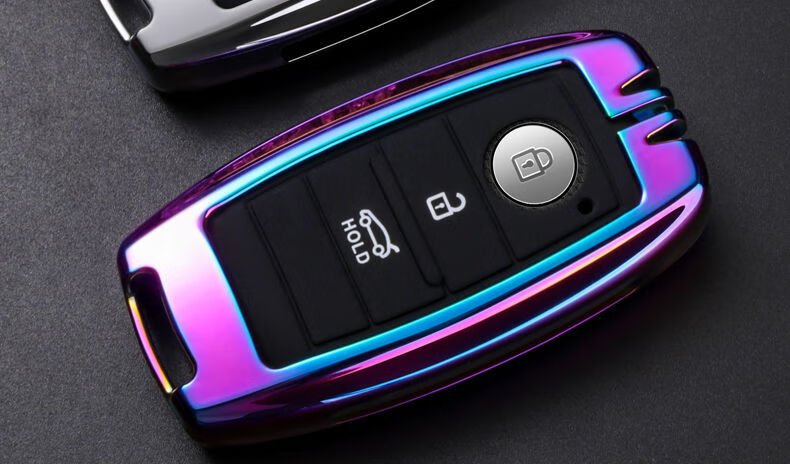
Pressing the car key triggers the headlights to flash and the doors to unlock. Behind these seemingly simple actions lies the intricate timing network of modern automotive electronics. The core component of the car remote control—the crystal oscillator—serves as the 'heartbeat' engine of this system.
The crystal oscillator produces precise frequency signals through the inverse piezoelectric effect of quartz crystal, providing accurate timing reference for the microcontroller in the remote control.
Yangxing Technology-Every button press is precise and error-free.
A tiny remote control, a big technology core.
The car remote key has evolved from a simple mechanical tool into a core electronic device integrating convenient access, intelligent control, security, and personalized services. It significantly enhances the convenience, safety, and comfort of vehicle usage, serving as a crucial gateway for the interactive experience of modern smart cars.
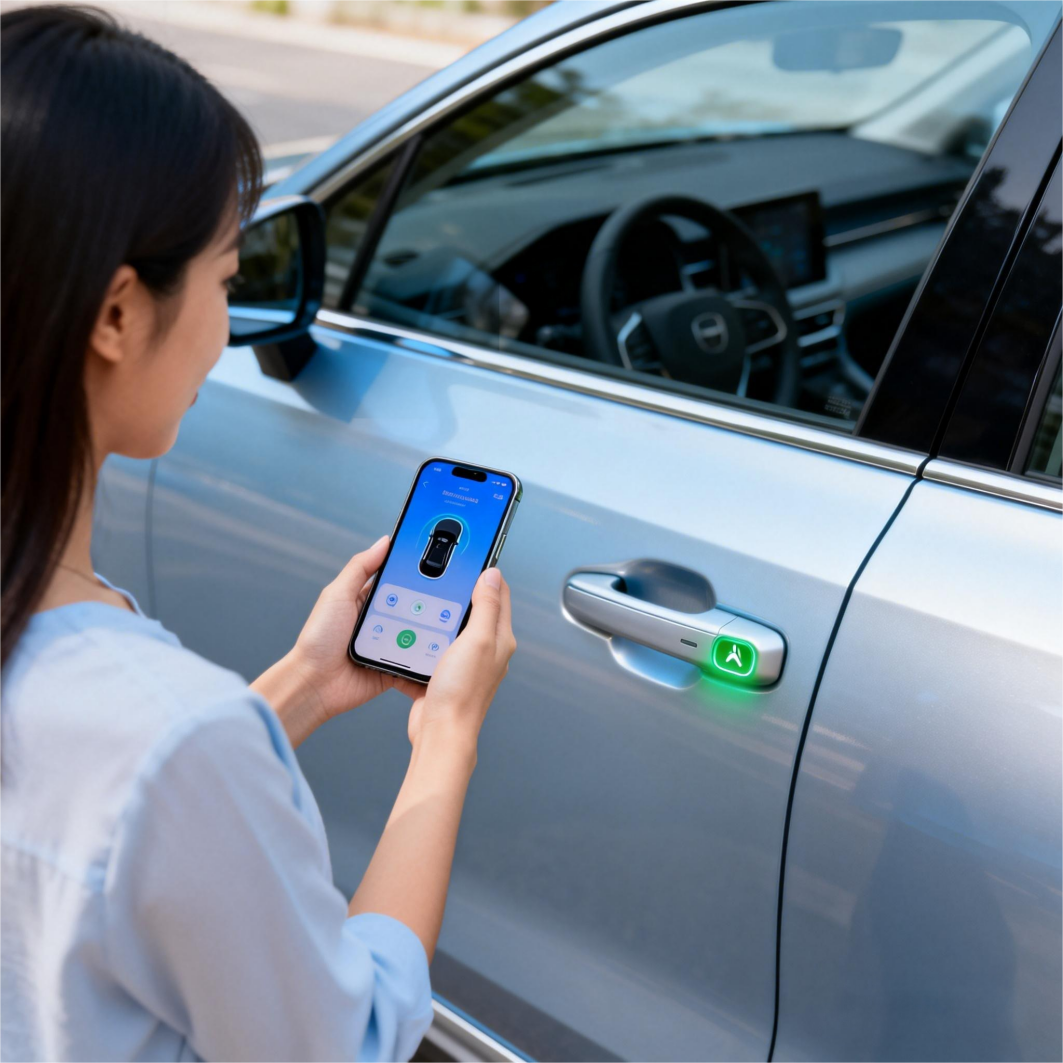
The Key Role of Crystal in Automobile Remote Control
In this process, the crystal oscillator performs three core functions:
· Provide reference frequency: supplies the MCU with system clock to ensure program logic executes on schedule;
· RF stability assurance: Provides carrier frequency reference for the RF transmitter module to prevent communication failures caused by frequency offset.
· Enhanced anti-interference capability: Quartz crystals with high Q factor exhibit exceptional frequency stability, maintaining performance even under harsh conditions like temperature fluctuations and vibrations.
Especially in the automobile environment, the remote control must face the temperature range of-40℃~+85℃, even wider, frequent drop impact and electromagnetic interference, which puts forward strict requirements for the reliability of crystal oscillator.
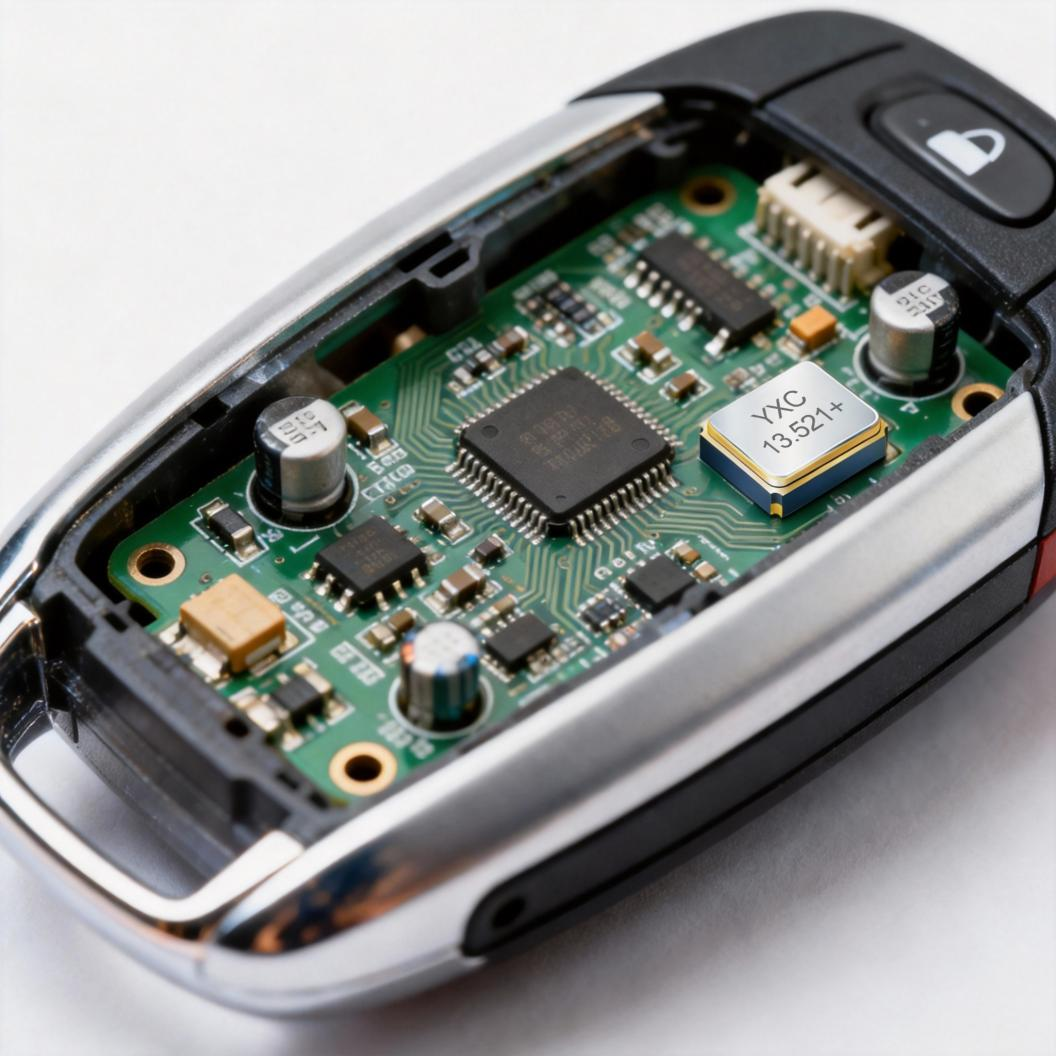
The Generation Evolution of Automobile Wireless Technology and the Selection of Crystal Oscillator
We categorize the technological evolution of car keys into three distinct phases, providing a detailed breakdown of the frequency sources, precision requirements, and packaging standards for each stage.
Traditional RKE/PKE phase (RF remote control and NFC emergency module)
This is currently the most widely adopted solution. The RF chip generates UHF band signals by multiplying the crystal oscillator's fundamental frequency through an internal phase-locked loop (PLL), which is highly sensitive to the alignment of the center frequency and the speed of oscillation initiation.
· Radio Frequency Remote Control Module (RKE/PKE): Manages vehicle control over a range of 30-50 meters.
a. 13.560MHz/13.52127MHz: This corresponds to the globally standardized 433.92MHz transmission frequency. The 13.52127MHz frequency is a precision offset point specifically designed to match the chip's frequency division algorithm, ensuring the transmitted signal is accurately locked onto the central channel for optimal reception sensitivity.
b. 9.84375MHz: This frequency corresponds to the 315MHz transmission standard commonly used in the US and Japan markets.
c. 27.1412MHz: The classic 27MHz frequency band solution originally adopted by certain American-made vehicles and industrial wireless remote controls.
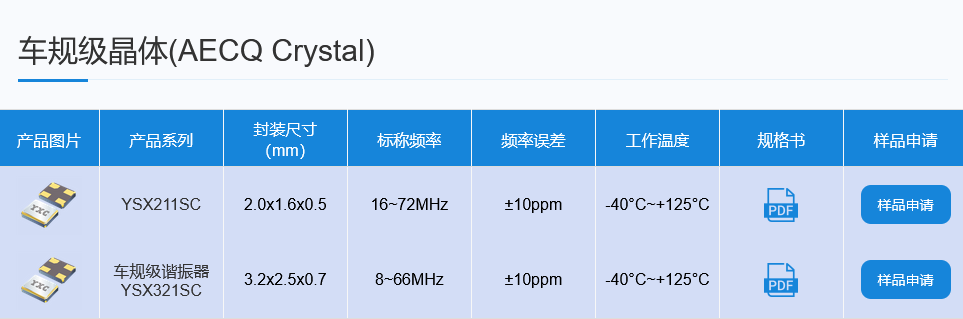
d. Selection criteria: Passive crystal oscillator with 3225 or 2016 package, requiring ±20ppm accuracy. Special attention must be paid to ESR (Equivalent Series Resistance) to ensure rapid oscillation even under low battery conditions in button cells.
· NFC Emergency Sensor Module: As a standalone hardware component, it enables door unlocking via near-field communication even when the key is completely drained of power.
a. 27.120MHz: The standard base frequency of Hyundai Motor's NFC (Near Field Communication) controller, supporting 13.56 MHz carrier handshake.
b. Selection criteria: 3225 package/2016 passive crystal oscillator. As the emergency 'last line of defense', the crystal oscillator must meet extremely high requirements for mechanical strength and impact resistance, and must strictly comply with AEC-Q200 certification.
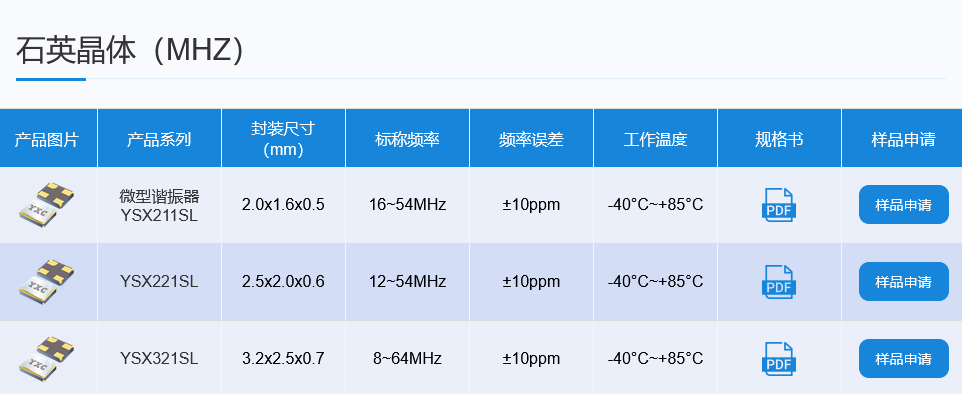
BLE Key Stage (Bluetooth Access)
With the widespread adoption of mobile digital keys, Bluetooth Low Energy (BLE) has become the mainstream solution for identity authentication and contactless access. The vehicle node requires frequent and rapid connections with mobile devices or smart keys.
Technical core: The Bluetooth frequency hopping mechanism requires extremely high frequency stability. Excessive crystal oscillator frequency deviation may cause connection timeouts or data retransmissions, compromising the user's seamless' unlock-on-proximity' experience.
Core frequency: 32.000MHz
Selection criteria: Frequency accuracy must be tightened to ±10ppm. AEC-Q200 certification is mandatory. High-precision crystal oscillators can significantly reduce connection setup time and effectively lower system standby power consumption.
UWB digital key phase (centimeter-level positioning)
The adoption of UWB (Ultra-Wideband) technology has endowed digital keys with precise spatial sensing capabilities. Its underlying mechanism shifts from phase modulation to ToF (Time of Flight) measurement, which is highly sensitive to time drift.
Technical core: Under the Time of Flight (ToF) mechanism, a 1ns time error is amplified to a 30cm spatial distance error. The temperature drift characteristics of conventional crystal oscillators are entirely incompatible with UWB's high-precision positioning algorithms.
Core frequency: 38.400 MHz
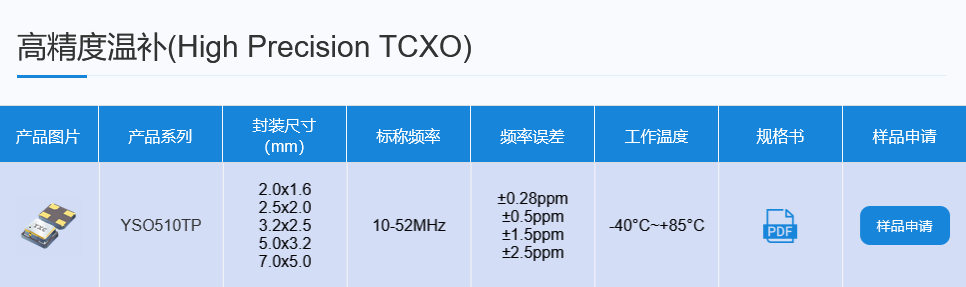
Selection criteria: A temperature-compensated crystal oscillator (TCXO) must be used, with an accuracy of ±2ppm. The TCXO suppresses temperature drift through its internal compensation circuit, making it the only solution to meet CCC specifications and achieve centimeter-level precision interaction.
application case
Yangxing Technology's automotive-grade resonators are now widely adopted by Tier1 and Tier2 core suppliers across the automotive supply chain, powering critical electronic systems including intelligent driving, connected vehicles, and in-vehicle entertainment. These components have become the vital' pulse 'for China's automotive electronics to achieve advanced intelligence.